
- Admin
- August 29, 2020
- Restaurant Technology
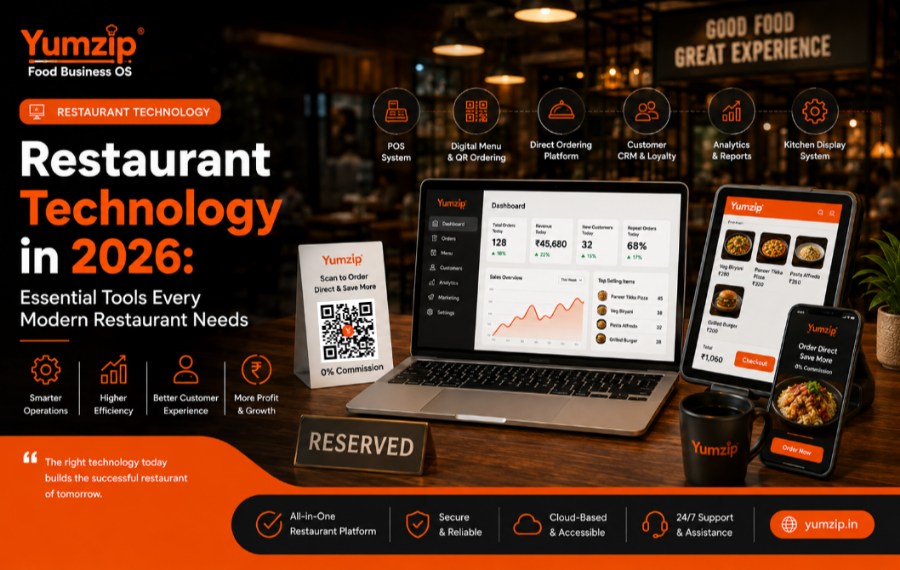
Restaurant Technology in 2026: Essential Tools Every Modern Restaurant Needs
Restaurant Technology in 2026: Essential Tools Every Modern Restaurant Needs
The restaurant industry in 2026 is no longer just about food and service. Technology now plays a central role in how restaurants operate, attract customers, and increase profits.
From online ordering systems to AI-powered automation, modern restaurants are adopting digital tools to stay competitive. If you are a restaurant owner, understanding restaurant technology is no longer optional — it is essential.
Let’s explore the most important restaurant technology tools every modern restaurant needs in 2026.
1️⃣ Online Ordering System
One of the biggest changes in the restaurant industry is the shift toward direct online ordering.
Customers prefer:
- Ordering from their phones
- Quick checkout
- Contactless payment
- Delivery or pickup options
An online ordering system allows restaurants to:
- Accept direct orders without paying 20–30% commission
- Collect customer data
- Increase repeat orders
- Control branding
In 2026, relying only on third-party aggregators is risky. Restaurants need their own digital ordering platform to maximize profits.
2️⃣ Cloud-Based POS System
A modern POS system does more than just billing.
In 2026, cloud-based POS systems help restaurants:
- Track sales in real time
- Manage inventory
- Monitor staff performance
- Generate reports
- Sync with online orders
Instead of traditional hardware-based systems, cloud POS allows owners to manage operations from anywhere.
3️⃣ QR Code Digital Menu
QR menus became popular during the pandemic, but in 2026 they are standard practice.
Benefits of QR menus:
- Contactless ordering
- Easy menu updates
- Reduced printing cost
- Faster table turnover
Customers can scan, view, and order directly from their phones. This improves efficiency and enhances the dining experience.
4️⃣ WhatsApp Order & Notification Systems
In markets like India, WhatsApp is a powerful tool.
Restaurants using WhatsApp integration can:
- Receive instant order notifications
- Confirm orders quickly
- Send promotional offers
- Re-engage past customers
This reduces missed orders and improves communication.
5️⃣ Delivery & Order Management Software
Managing delivery manually leads to confusion.
Modern restaurant delivery systems help:
- Assign delivery zones
- Calculate delivery charges automatically
- Track order status
- Reduce delays
This improves customer satisfaction and reduces operational chaos.
6️⃣ Automation & AI in Restaurant
Artificial Intelligence is transforming restaurant operations.
Examples include:
- AI-based demand forecasting
- Automated inventory tracking
- Smart staff scheduling
- Sales prediction tools
Automation reduces human error and increases efficiency.
7️⃣ Data & Analytics Dashboard
Data is the new currency in 2026.
Restaurants using analytics tools can:
- Identify best-selling items
- Track peak hours
- Analyze customer behavior
- Increase average order value
Without data, growth becomes guesswork.
Why Restaurant Technology Matters in 2026
Technology is no longer a luxury. It directly impacts:
- Profit margins
- Operational efficiency
- Customer retention
- Brand control
Restaurants that invest in digital systems grow faster and survive longer in competitive markets.
Those who ignore technology risk losing customers to tech-enabled competitors.
Final Thoughts
Restaurant technology in 2026 is about control, automation, and profitability.
The essential tools every restaurant needs include:
- Online ordering system
- Cloud POS
- QR digital menu
- WhatsApp integration
- Delivery management
- Data analytics
By adopting the right technology, restaurants can reduce dependency on third-party platforms, increase direct orders, and build long-term customer relationships.
The future of restaurants is digital — and those who adapt early will lead the market.