
- Admin
- August 29, 2020
- Restaurant Customer Experience & Loyalty
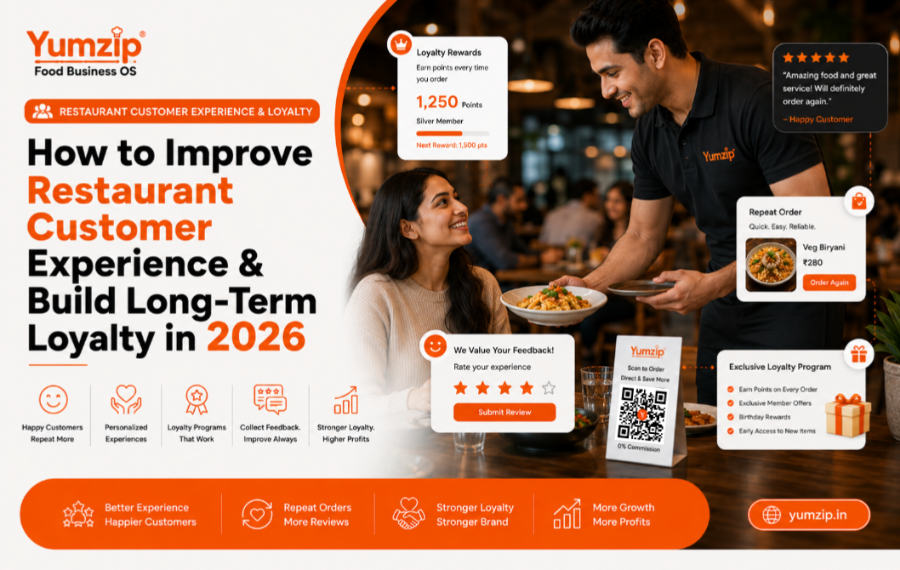
How to Improve Restaurant Customer Experience & Build Long-Term Loyalty in 2026
How to Improve Restaurant Customer Experience & Build Long-Term Customer Loyalty
The restaurant industry is more competitive than ever. With food delivery apps, cloud kitchens, and aggressive online marketing, attracting customers is no longer the biggest challenge — retaining them is.
Acquiring a new customer can cost 5–7 times more than retaining an existing one. Restaurants that focus on customer experience and loyalty consistently see:
- Higher repeat orders
- Lower marketing costs
- Stronger brand reputation
- Increased customer lifetime value
- Sustainable long-term growth
If you want predictable revenue instead of depending only on discounts and aggregator platforms, improving your restaurant customer experience should be your top priority.
This guide explains proven strategies to improve customer satisfaction, increase repeat orders, and build long-term restaurant loyalty.
What Is Restaurant Customer Experience?
Restaurant customer experience includes every interaction a customer has with your brand, both online and offline.
This includes:
- Google search impression
- Website browsing experience
- Online ordering process
- Dine-in ambiance
- Food quality and consistency
- Packaging and delivery
- Customer support
- Post-order communication
Every touchpoint influences whether a customer comes back — or chooses a competitor.
Why Customer Loyalty Is More Profitable Than Discounts
Many restaurants rely heavily on discounts to drive orders. While discounts may increase short-term sales, they do not build loyalty.
True customer loyalty is built through:
- Consistent food quality
- Fast and smooth ordering
- Personalized engagement
- Trust and transparency
- Positive overall experience
Customers who trust your brand return without needing constant price cuts.
7 Proven Strategies to Improve Restaurant Customer Experience
1. Simplify Online Ordering
A complicated ordering process reduces conversions.
Best practices:
- Fast-loading website
- Clear and structured menu layout
- Minimal checkout steps
- Multiple payment options
- Mobile-friendly design
The easier it is to order, the higher your conversion rate.
2. Collect and Use Customer Data
When customers order through third-party aggregators, you often lose access to valuable customer data.
With direct ordering systems, you can:
- Identify repeat customers
- Send personalized promotions
- Offer birthday rewards
- Track order preferences
- Improve targeted marketing
Customer data helps you increase repeat business and reduce dependency on aggregator platforms.
3. Create a Simple Loyalty Program
Loyalty programs do not need to be complex.
Examples:
- Free item after 5 orders
- Points-based rewards
- Referral incentives
- Exclusive member offers
A structured loyalty program encourages customers to return regularly.
4. Respond to Online Reviews Professionally
Online reputation directly affects restaurant sales.
Best practices:
- Respond to every review
- Thank customers for positive feedback
- Address negative reviews calmly
- Offer solutions publicly
Active review management builds trust and credibility.
5. Improve Packaging and Presentation
For delivery-focused restaurants, packaging is part of the experience.
Consider:
- Branded packaging
- Secure and spill-proof containers
- Thank-you notes
- Small surprise add-ons
Professional presentation increases perceived value.
6. Train Staff for Experience Excellence
Customer interaction plays a crucial role in loyalty.
Train your staff to focus on:
- Polite communication
- Fast response time
- Problem resolution
- Clear order confirmation
Well-trained staff directly impact repeat visits.
7. Implement Post-Order Engagement
Engagement should not stop after the order is delivered.
Effective post-order strategies include:
- Thank-you messages via WhatsApp or SMS
- Feedback requests
- Special offers for next orders
- New menu announcements
Staying connected increases retention and lifetime value.
Key Metrics to Measure Customer Loyalty
To improve loyalty, track measurable indicators:
- Repeat purchase rate
- Customer lifetime value (CLV)
- Average order value (AOV)
- Customer retention rate
- Online rating score
- Complaint resolution time
Data-driven decisions lead to long-term profitability.
Common Mistakes Restaurants Make
- Over-reliance on discount marketing
- Ignoring customer data
- Slow response to complaints
- Complicated online ordering
- Inconsistent food quality
Avoiding these mistakes can significantly improve customer retention.
Final Thoughts
Restaurant success is no longer just about attracting new customers — it’s about building long-term relationships.
By focusing on customer experience and loyalty, restaurants can:
- Increase direct orders
- Reduce commission dependency
- Improve profit margins
- Build a strong and trusted brand
Customer loyalty is not built overnight, but with the right systems and strategies, it becomes your most valuable long-term asset.